Our Story
Wind and Frost.
The Forces That Shape a Leaf.
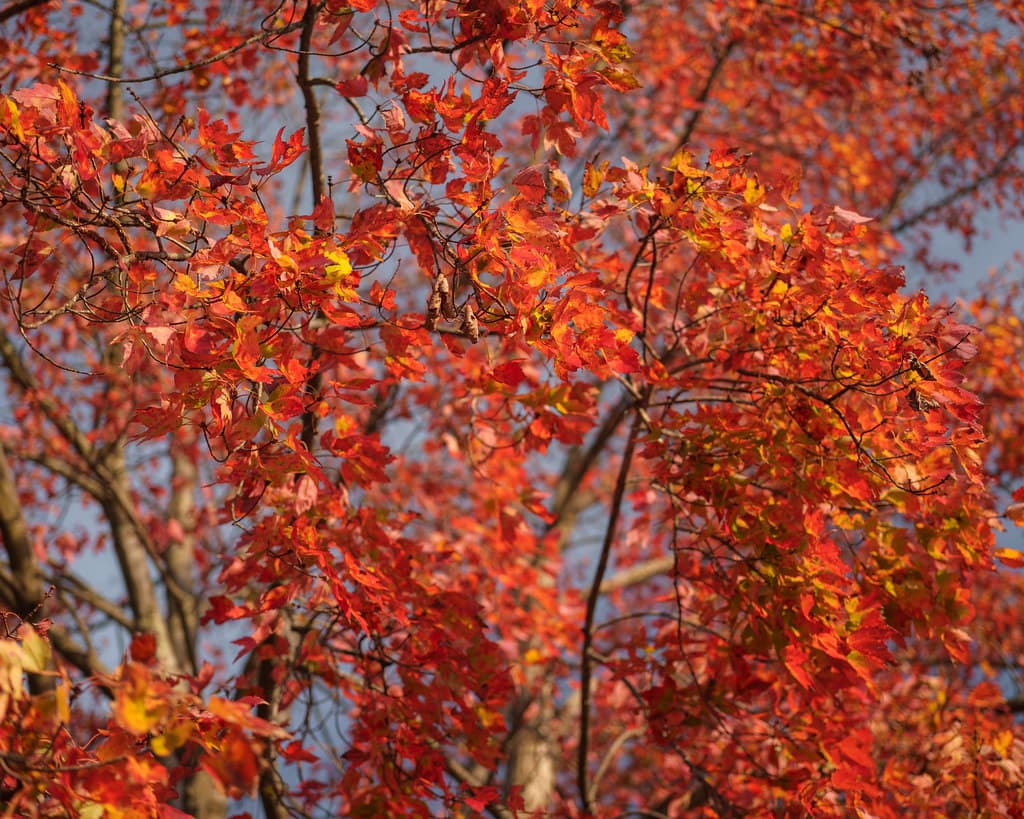
Pyff and forst—Old Norse for wind and frost. The two elemental forces that coax color from a green canopy each autumn, triggering the chemical cascade that turns chlorophyll into carotenoid, and an ordinary forest into something worth stopping the car for.
We founded Pyff & Forst in 2024 with a simple observation: every fall, New England produces one of the most beautiful natural displays on earth—and most of it ends up in a yard bag. We thought there had to be a better way.
Our company partners with foraging teams across Vermont, New Hampshire, Maine, and Massachusetts to hand-collect premium fallen foliage at peak color. We sort, grade, and carefully package each order so that the beauty of a New England autumn can reach anyone, anywhere in the country—whether for a wedding, a seasonal centerpiece, or a Saturday afternoon spent reliving the simple joy of a leaf pile.
It's a straightforward idea, rooted in respect for the season and the forests that make it possible.
Why “Pyff & Forst”?
The name comes from the Old Norse words for the two forces that drive autumn color. Pyff—wind—is what loosens a leaf from its branch and carries it to the forest floor. Forst—frost—is the catalyst: the first hard frost accelerates pigment change and signals the tree to let go. Together, they are the authors of every autumn.
We chose a Nordic name because Scandinavian cultures have long understood something that modern life often forgets: that the seasons are not obstacles to manage, but rhythms to live within. Our work is seasonal by nature. We harvest only what falls, ship only when the color is right, and close for the year when the forest does.
Our Sourcing
Every leaf in the Pyff & Forst collection is wild-harvested from the forests and woodlands of New England. We work exclusively with naturally fallen leaves—we never strip, shake, or otherwise encourage a tree to part with its foliage before it's ready.
Our foraging teams operate across four states, following the color as it migrates south with the season. They know the forests well—which sugar maples turn the deepest crimson, which oaks hold their bronze the longest, where the birches catch the afternoon light.
We harvest less than 2% of available leaf litter in any given collection area. The vast majority remains on the forest floor, where it serves as habitat for overwintering insects, food for decomposers, and the foundation of next year's topsoil.
A single acre of forest can produce over a ton of fallen leaves each autumn. This leaf litter shelters firefly larvae, provides nesting material for native bees, and insulates root systems through the harshest New England winters. Responsible sourcing isn't a marketing decision for us—it's the only way this works.
Our Process
Collection
Our foraging teams collect fallen leaves by hand at peak color, typically within 24–48 hours of the first hard frost in each microclimate. Timing is everything—too early and the color hasn't fully developed; too late and the leaves have begun to dry and curl.
Grading & Sorting
Each batch is sorted by species, color profile, and structural integrity. We grade for saturation, size consistency, and what we call “hand feel”—the tactile quality that distinguishes a truly premium leaf from an ordinary one. Damaged or discolored specimens are composted on-site.
Packaging & Shipping
Orders are packed in recycled kraft paper with a proprietary layering system designed to preserve color and prevent crumbling during transit. Each shipment includes a species identification card and care guide. We ship via USPS Priority for most sizes, and freight for The Estate.